WNPSSL

WNPS Youth Wing Fosters Conservation Education

The Youth Wing of the Wildlife and Nature Protection Society of Sri Lanka (WNPS), in collaboration with USAID, recently opened the "Tales of Conservation" exhibition, a compelling art exhibition which created activism aimed at increasing environmental awareness and action.

Nations Trust WNPS Monthly Lecture Wired for the Wild: Innovation, Empathy & the New Age of Wildlife Photography 6 pm, 19 June 2025 | Jasmine Hall, BMICH By Lakshitha Karunarathna

By Risidra Mendis

The exhibition displayed a diverse collection of artworks that addressed important issues such as waste management, conservation, climate change, education, and policies regarding the environment. Each piece was more than just art, it sparked conversations, provided visitors with practical solutions, and allowed them to interact directly with experts in numerous fields. Sri Lanka, a biodiversity hotspot, is often taken for granted by its own people. Baba Dioum’s timeless words resonate deeply: “We will conserve only what we love; we will love only what we understand, and we will understand only what we are taught.” Recognizing the transformative power of education in conservation, artists Umaiyanthy Kugendiran and Mahesha Kariyapperuma used their work to shed light on the fragility of Sri Lanka’s biodiversity and the urgent need for collective action.

Kugendiran’s digital artwork revealed the harsh realities of regions at risk that have been severely impacted by environmental issues. Through powerful portrayals of the Human-Elephant Conflict, the Meethotamulla Garbage Dump Collapse, and the MV X-Press Pearl Disaster, the artist demonstrated how those who rely on nature for survival are frequently the hardest harmed by degradation of the environment.

Kariyapperuma’s interactive artwork used a novel method, transforming habitat fragmentation
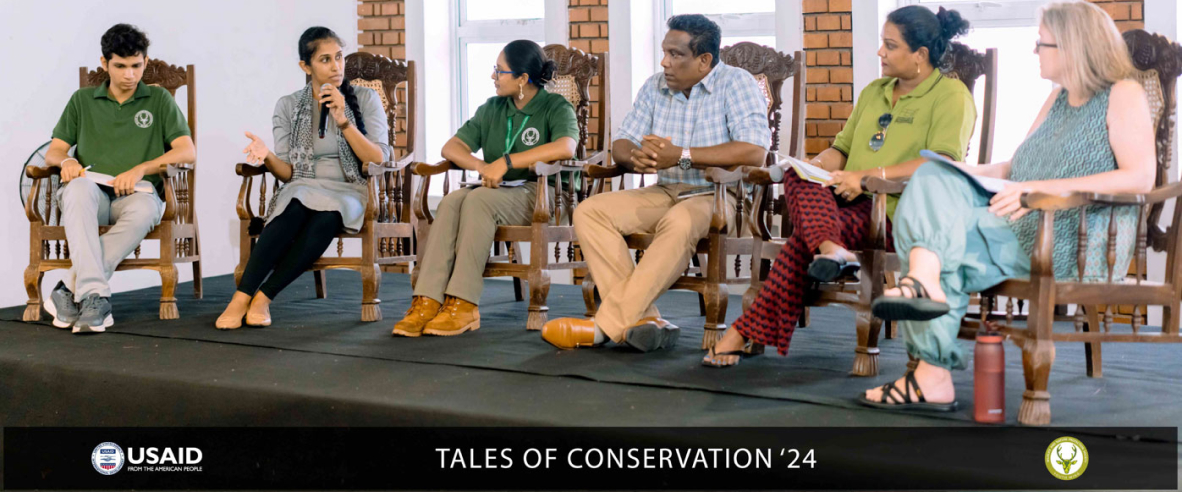
into a solution to the issue. Visitors became participants, putting together solutions to restore environmental balance. This experience broke the boundaries between both art and reality, communicating the importance and impact of an individual acts on conservation efforts. The exhibition extended beyond visual art to create a vibrant platform for environmental engagement. Insightful forum discussions encouraged attendees to reflect, learn, and take action within their communities. Moderated by Ms. Pavithra Attanayake; a young conservation enthusiast and a conservation educator, the forum featured an esteemed panel of experts: Mr. Uditha Hettige from Young Zoologists’ Association (YZA), Ms. Narmadha Dangampola from Butterfly Conservation Society of Sri Lanka (BCSSL), Ms. Kanchana Perera from FEO, Dr. Jody Miller; a conservation educator, and Mr. Keshan Perera from WNPS Youth Wing.

The panelists underscored the importance of integrating traditional knowledge systems—such as local medicine and home gardening—into conservation education programs. They emphasized the need for collaboration across disciplines, thorough resource assessment, and mutual respect, all while prioritizing youth engagement. The discussion also highlighted the power of interactive tools like social media, murals, storytelling, and AI to reach and inspire diverse audiences.


Both collaboration and community became one of the major themes within the forum. According to the experts, open dialogue would encourage, as well as empower an organization for shared goals and resources, and such relationships would develop between the organizations and local communities. Effective conservation programs are those that can be tailored to local specificities, align with local contexts, and take the research-and-action continuum into account. It was also identified that defining the values and behaviors would be the first steps towards community-based management systems.

The “Tales of Conservation” exhibition communicated the urgent appeal and important message that preserving the planet is crucial. It inspires the audience to become advocates through which the future would not just be talked about, but instead, worked on toward a vision where the rich biodiversity of Sri Lanka thrives into the generations to come.

 

Accelerated natural regeneration of mangroves

This project aims to scientifically restore 45 hectares of abandoned shrimp farms and it was commenced as a collaboration between the Department of Wildlife Conservation (DWC) and Wildlife and Nature Protection Society (WNPS) that came on board as the principle science partner and the Wayamba University as the technical partner of this project. Anawilundawa was declared a sanctuary in 1997 and subsequently it was identified as a RAMSAR wetland in 2001.
“During the 1980s the entire area was a shrimp farm and back then this place was not declared as a sanctuary,” said Thilina Kumarasiri, Senior Research Officer at WNPS. “In the early 1990s people abandoned the entire aquaculture project and 30 years later we can still see remnants of these shrimp farms. Between the project site and the Dutch Canal there’s a natural mangrove cover and on the other side there are terrestrial forest patches. But between these forest patches there are barren lands. Due to shrimp farms, people blocked the normal hydrological pathways by creating barriers and aquaculture projects which block brackish water for a longer time. Due to the use of chemicals the soil is disturbed as well. Therefore there’s less chance for natural vegetation to thrive. During heavy rains the area gets inundated and during the dry season the few plants that emerge, die. However, the DWC declared this as a proper place for mangrove restoration because before the emergence of shrimp farms this area had a pristine mangrove ecosystem,” he added.

Scientific restoration

Mangroves are an integral part of Sri Lanka’s forests and constitute about 2% of the country’s total forest cover – they are very much a part of the fast dwindling 17% of our primary forests. One of the main issues that was addressed at the site was designing hydrological pathways. “The first canal design was the Fish Bone method which is a global method which inundates areas that are not inundated by natural water,” Kumarasiri continued. “Natural high tide is not enough to inundate this area. Sri Lanka is not blessed with high tide conditions. We measured tidal fluctuations in this area which is less than 20 centimetres, but we need tidal fluctuations for mangroves and we pump water naturally. So we take water into the restoration site with tidal fluctuations. With high tides we get natural seeds, in fact we are not replanting mangroves, but restoring an ecosystem instead. If we go for manual pumping, someone has to be here all the time to pump water. However we identified certain drawbacks with the fish bone design because we observed that some areas didn’t get adequate water. For that we found a solution where we created another pathway with the expertise of the Sri Lanka Navy hydrography unit. This is the first time they got involved in an environmental conservation project. They made a complete contour map of the entire area and now we have a clear knowledge about high ground, low ground etc. These canal systems were created following these contour lines. When these canals store water during the dry season it is more efficient for mangrove restoration.”

The canal systems were created in 2021. During a recent visit to the project site facilitated by WNPS, the Daily Mirror had an exclusive opportunity to get a first-hand experience of the initiative. It was quite fascinating to see mangrove sprouts of various sizes and shapes, emerging from a land that was once dedicated for shrimp farming. Some plants were taking a dominant space while others were taking time to mature themselves into a mighty mangrove plant. The researchers and technical experts have carefully allowed nature to decide what’s best for the environment.

Creating wildlife habitats

Explaining how additional wildlife habitats were created Prof. Sevvandi Jayakody, conservationist and Senior Lecturer at the Department of Aquaculture and Fisheries at the Wayamba University said that the mounds were created from dug soil from the canal. “We didn’t want to remove any soil from the earth. We loaded the soil on mounds and created additional wildlife habitats. This is a RAMSAR sanctuary and birds prefer elevated landscapes. Rizhophora mucronata is the best plant to stabilize the system and trap these sediment. When they trap sediments it allows any floating seed to come and establish very easily. There’s a stark difference between what we have planted and what has come up naturally – in fact we have observed the real happiness between the two. In addition to active planting we also use a technique called active seed dispersal where we parachute the seeds. In all these mounds we parachute the seeds and once the rainy season concludes the most successful ones establish themselves. So we allow nature to decide what’s best for the area,” she added.

Kumarasiri further said that when it comes to active planting they opt for different methods. “In Sri Lanka we have 21 true mangrove species, but in this region, along Muthupanthiya and Anawilundawa we have 13 true mangrove species. Before starting the project we conducted several surveys to understand the flora and fauna profiles of this area and their distribution. So we make decisions according to this data and therefore we are going to repeat the natural system in this restoration project as well. Even for these 13 species the planting method is different from one another because some mangrove species definitely need a nursery before planting, but for some we can go for direct planting. Rizhophora mucronata is one species that we can go for direct planting where the survival rate is 80-85%,” added Kumarasiri.

One of the main goals of developing Anawilundawa is to promote it as a hub for conservation research. Already, a visitor Centre is being constructed and an on-site lab facility allows undergraduate and post-graduate and doctoral students to study the area in detail, to share their newfound knowledge and data with experts to improve the ecosystem further.

Ongoing research

Some of the ongoing research include analyses for micro plastics, sediments, checking water quality, floral and faunal surveys, surveys for tiny animals living in this site because they are very important as they are the final consumers of the ecosystem, explained Ashan Hasintha, Science Assistant of the ANRM Project. “There should be animals to consume the primary productivity and develop the food web. We research from the basement with regards to ecosystem development. We also develop products for mangroves. The surrounding community needs to identify the potential of these mangrove ecosystems and how they can benefit from it rather than going fishing and getting their harvest and cutting down mangroves for firewood and other products. Therefore we do research for product development and also testing soil parameters to assess carbon stocks,” explained Hasintha.

Adding her comments, Waruni Tissera, Research Officer at WNPS said that a bird diversity assessment survey representing the entire Anawilundawa RAMSAR site was commenced to assess the avi fauna diversity and how it differs around the restoration site and natural vegetation areas. “We conduct this survey every month for three days and bring different experts. We have selected 14 vegetation types and recorded 166 birds over a period of one year. More than 10-15 birds have been newly recorded or identified in this area. During the migratory period we recorded thousands of migrant species in surrounding paddy fields. But before this study there had been no records about these species in this area. We identified an year-round nesting colony in tank areas and this is another first. So we are doing more research around these areas to identify new species. We are also planning to do a survey on dry zone species as well,” she said while adding that 95 species of butterflies too were found from a recently conducted butterfly survey and that four species endemic to Anawilundawa too were identified.

Prof. Jayakody further said that Anawilundawa plays a crucial role along the international migratory route of birds. “This seems to be a spot where birds congregate and decide whether they are going to fly further, into the mountains or further south. For the RAMSAR Convention it is mandatory to update the status of the wetland periodically and we are in the process of updating all data to the site,” Prof. Jayakody said.

Empowering communities

In Sri Lanka when you say sanctuary it can include both government land and private land, explained Prof. Jayakody. “That’s the difference between a sanctuary and a national park. Therefore we have traditional communities and they are allowed to continue their traditional activities such as paddy farming and we have the fisheries community on the other side. So what we are trying to do is apart from the traditional livelihood activities they have known, we are trying to create potential entrepreneurship opportunities,” she further said.

This is why the project organisers conducted an entrepreneurship skills development programme through a grant provided by the US Forest Service to empower surrounding communities to better understand the importance of conserving mangrove ecosystems. Therefore, participants were encouraged to look at non-timber forest produce that could be used, introducing it to the community, so that they would understand that having mangroves is what enables to them to continue to their livelihood.

The curriculum for this skills development programme was meticulously designed and the programme also invited experts in fields such as milk-based products, fish-based products, coconut-based products, home gardening, machinery used in food processing, livestock-based products, food hygiene and packaging, marketing, accounting, business leadership, business law, and food production and processing lifecycle management to deliver hands-on training sessions.

Following the training programme, participants were encouraged to submit their business proposals. During our visit, three participants who had submitted standout proposals inked agreements to receive seed capital from WNPS. Apart from funding, they will also receive expert guidance, internship opportunities while gaining knowledge to develop their business products.
Research students are also given an opportunity to develop products at low cost and with less machinery, linking them with industry experts from time to time, so that their products too could always be introduced as cottage industries.

An inclusive future with mangroves

Mangroves in Negombo are fast infested with invasive trees. Therefore Prof. Jayakody and the team suggests that the Forest Conservation Department could encourage people to cut down invasive trees and produce fish aggregating devices instead of mangroves.

She further said that immediately after the fallow period farmers start using weedicides to prepare for the next harvesting season. “But having seen the amazing number of birds we wonder whether we could discuss with farmers in producing a bird friendly rice variety which could be sold at a premium price. This way they will be mindful about controlling their use of weedicides and it will be a win-win situation for both farmers and birds. It could be marketed as a bird friendly rice from the RAMSAR site,” she added.

The ANRM project is owned by the DWC while the WNPS is the principle science partner to the DWC. State institutions involved in the project include Ministry of Environment in addition to the Department of Forests and Wayamba University. Several partners that have collaborated with WNPS in this endeavor include Hemas Consumer Brands, Lanka Environment Fund, Hayley’s Advantis, CMA CGM, Star Garments, Hirdramani Apparel and Biodiversity Sri Lanka. The international partners of WNPS include US Forest Service, CEFAS-UK and CSIRO Australia.

This article first appeared in the Daily Mirror on the 17th of December 2024.

A hungry predator’s dilemma

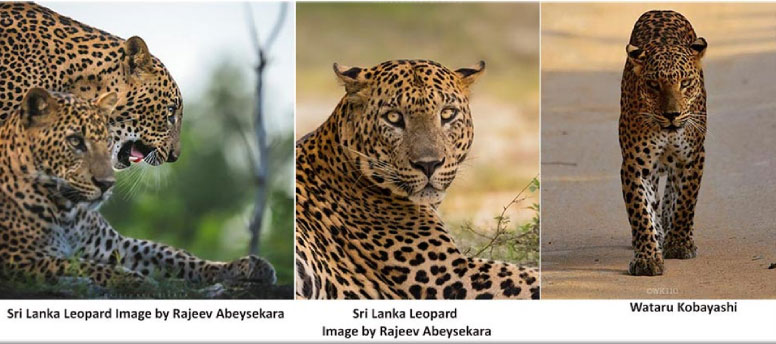
A predator’s survival depends heavily on the availability of natural prey. Although wild prey- deer, primates, wildboar – are still present, reducing wild habitat, particularly due to deforestation, further reduces the vegetation and cover needed to support healthy prey populations.

Many forested areas are used for free-range cattle grazing, leading to increased competition for food and space, which puts further pressure on wild herbivores. If prey becomes scarce, leopards are forced to seek alternatives, such as domestic livestock, bringing them into conflict with humans, and increasing the risk to them from retaliatory killings and disease.

A narrowing window of survival

The threats faced by leopards in Sri Lanka are not isolated; they are interconnected and compounding. Habitat loss leads to fragmentation, which in turn isolates populations, increases conflict, and heightens vulnerability to snares and poaching. The decline of prey and the rise of human settlements only tighten the noose.

But Sri Lanka finds itself in a better position than many other nations with substantial extant biodiversity, including wild prey for leopards, as well as reasonable forest cover and a climate that allows for effective reforestation and natural regeneration of degraded areas. A well-entrenched conservation ethic which sees sharing space with wildlife as normal creates additional momentum for long-term conservation.

Conservation solutions must be multi-faceted: protecting existing habitats, reconnecting fragmented landscapes through identified ecological corridors, and strengthening law enforcement. Community engagement and snare removal campaigns are also crucial in areas where these are now very real threats.

Wildlife needs stepping stones of connected forests within the fabric of a human dominated landscape. We must move beyond thinking of Protected Areas as islands. Instead, they should be viewed as nodes in a larger ecological network — one that requires political will, scientific insight, and public support to thrive. The leopard is an ideal proxy for wider conservation on this island. It’s unique ‘Umbrella species’ status – the influence it exerts on larger landscapes and biodiversity – means that ensuring this island leopards future, could ensure our functioning ecosystems.

We must act now, so that the Sri Lankan leopard does not become a shadow in the future— a symbol of a wilderness we failed to preserve. It bodes well that we still have leopards, let us not take that for granted.

This article first appeared in the Sunday Observer on the 3rd of August 2025.


More News

People and Leopards: A case study from Tourism

In this article, I would like to consider a few aspects of the evolving and complex relationships between people and leopards, particularly in connection with the tourism industry.