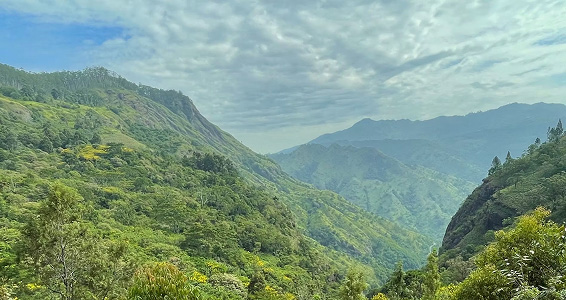
Preserving Land and Nature (Guarantee) Ltd, or PLANT, is an initiative of the Wildlife and Nature Protection Society that was established for the ecorestoration in the South Western landscape through the establishment and protection of forest corridors within the Emerald Trails, which would connect isolated forest patches, restore habitat continuity, and provide safe passage for endemic species that are uniquely found in Sri Lanka.
The Multi-Regional Leopard Research and Conservation Project (LRCP) is the most extensive and coordinated wild cat conservation programme ever launched outside protected areas in Sri Lanka. Initiated in 2022 by the Wildlife and Nature Protection Society (WNPS) in partnership with LOLC Holdings PLC, the LRCP was born out of an urgent need to better understand the dynamics of human-leopard coexistence in rapidly urbanising and deforested landscapes.
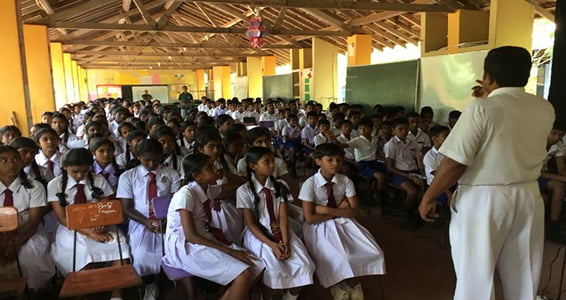
Through structured learning, youth leadership, art activism, and immersive outdoor experiences, the WNPS Youth Wing is building a vibrant network of young conservationists.
Today marks the fourth annual Sri Lanka Leopard Day – the day was first commemorated following a proposal made by the Wildlife and Nature Protection Society (WNPS) in 2021 based off of a research paper by conservationist and leopard researcher Dr. Sriyanie Miththapala which showed that the Sri Lankan leopard (Panthera pardus kotiya) is a unique subspecies of leopard endemic to our little island.
At the heart of Sri Lanka’s remarkable biodiversity lies a profound responsibility: to protect the species that exist only on this island and nowhere else on earth. The Endemics Subcommittee of the Wildlife and Nature Protection Society (WNPS) carries this responsibility with purpose and urgency. As threats intensify from deforestation, climate change, and human expansion, the subcommittee’s work has become more crucial to the study, recovery, and preservation of the country’s most threatened endemic species.
The Youth Leadership for Climate Action (YLCA) project, delivered in partnership with the British Council, stands as a significant milestone in the WNPS Youth Wing’s mission to equip young people with the tools to lead Sri Lanka’s response to climate change. First launched in 2022, this initiative is designed to train youth aged 18 to 29 to develop and lead sustainable, inclusive, and climate-resilient interventions within their communities. By fostering youth leadership and environmental awareness, the YLCA project strengthens climate literacy while driving grassroots action across vulnerable districts.
The exhibition consisted of a variety of works that included, but were not limited to, paintings, sculpture, and digital artwork, all of which addressed issues like recycling, conservation, climate change, education, and policies on the environment. These pieces provided both a visual appeal and gave us an opportunity to witness the chance to think about new ways of solving several problems affecting the environment.
The Youth Wing of the Wildlife and Nature Protection Society of Sri Lanka (WNPS), in association with USAID, opened the “Tales of Conservation” exhibit that uses art to inspire environmental awareness and action. This activity-centered exhibition cast a wide net to incorporate various artworks on waste management, conservation, climate change, education, and environmental legislation—all of which intersect with the irreplaceable human need for maintaining the natural environment.
The Accelerated Natural Regeneration of Mangroves (ANRM) Project in Anawilundawa Wetland Sanctuary represents one of Sri Lanka’s most ambitious and scientifically rigorous initiatives for coastal ecosystem restoration, which also led to Sri Lanka winning a UN Flagship Award, underscoring its global recognition as a model of excellence in ecosystem restoration.
The Marine Subcommittee of the Wildlife and Nature Protection Society (WNPS) prioritises community engagement and knowledge-sharing as key components of marine conservation in Sri Lanka. Recognising that sustainable outcomes require informed and empowered stakeholders, the subcommittee conducts training programs and public awareness initiatives that connect scientific research with local action.