


WNPSSL

Building Pathways to Peace: Sustainable Mitigation Strategie

The Human–Elephant Coexistence Subcommittee of the Wildlife and Nature Protection Society (WNPS) continues to advance practical, science-driven strategies to mitigate human–elephant conflict across Sri Lanka. In 2024, the Subcommittee focused on empowering communities, strengthening policy advocacy, and implementing tested mitigation methods, all while supporting research and data collection. A central priority has been the full implementation of the National Action Plan for the Mitigation of Human–Elephant Conflict (NAP), originally developed in 2020, along with ensuring that the 2022 Presidential Committee has adequate resources to oversee its activities. By engaging with government authorities, civil society, and farming communities, the Subcommittee has worked to integrate science-led approaches with practical, low-cost interventions that protect both people and elephants.

A major focus of mitigation has been protective fencing, supported through Dr. Prithiviraj Fernando’s initiatives, where more than fifty village fences and twenty-five paddy-field electric fences have been successfully maintained for up to fifteen years in multiple districts, offering long-term protection to communities while allowing elephants to move freely without harm. These fences are complemented by the continued operation of the Low-Cost Repellent System (LRS), which has demonstrated eighty-two percent efficacy over three years across six districts. Ongoing monitoring and data collection allow for evaluation and potential academic publication, supporting a wider understanding of effective mitigation practices.

The Subcommittee also prioritizes large-scale initiatives through partnerships such as the World Bank-funded Climate Smart Irrigated Agriculture Project (CSIAP), which facilitated the deployment of 238 seasonal electric fences for Rs. 475 million. These fences are strategically installed during cultivation periods and removed after harvest, reducing elephant incursions into farms and demonstrating the value of collaboration between government programs, communities, and conservation experts. Alongside these interventions, the Subcommittee continues to provide guidance, training, and technical support to ensure proper installation, maintenance, and use of mitigation tools.

Legal advocacy remains another critical component of sustainable mitigation. WNPS has ongoing efforts to secure landmark rulings against elephant killings, seeking to establish lasting protections for the species while highlighting the importance of non-lethal strategies. Through careful coordination with farmers, government officials, and civil society partners, the Subcommittee ensures that mitigation measures are scientifically sound, culturally sensitive, and practically implementable. Education and awareness form a vital aspect of the Subcommittee’s work. Programs conducted in villages and for youth aim to strengthen understanding of human–elephant coexistence, empowering communities to adopt non-lethal conflict prevention methods while fostering empathy for elephants. This multi-pronged approach illustrates WNPS’s commitment to solutions that integrate science, law, and community action, establishing a model for sustainable coexistence that balances the needs of humans and elephants alike.

More Projects

RECOVERING FROM THE CRISIS WITHOUT FURTHER HARM TO THE ENVIRONMENT

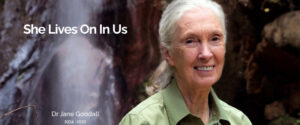
The Wildlife and Nature Protection Society of Sri Lanka (WNPS) joins the global conservation community in mourning the passing of Dr. Jane Goodall — an extraordinary scientist, visionary conservationist, and a true champion of nature. Her work transformed our understanding of the natural world and, more importantly, our place within it.

IS WILDLIFE TOURISM A MAGNET FOR HIGH SPENDERS

The Wildlife and Nature Protection Society of Sri Lanka (WNPS) joins the global conservation community in mourning the passing of Dr. Jane Goodall — an extraordinary scientist, visionary conservationist, and a true champion of nature. Her work transformed our understanding of the natural world and, more importantly, our place within it.