
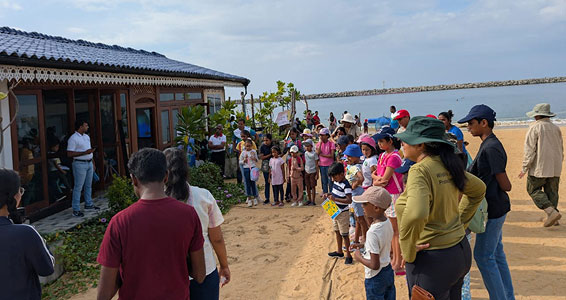
Youth-Led Engagement and Education for a Conservation-Driven Community
Through structured learning, youth leadership, art activism, and immersive outdoor experiences, the WNPS Youth Wing is building a vibrant network of young conservationists
(Panthera pardus kotiya)
In 2024, the Youth Wing emerged as a national force in youth-led environmental activism. More than 25 school programmes and 11 youth-focused initiatives were conducted, reaching over 3,300 school children across the island. From biodiversity education and climate change workshops to art-driven campaigns like Tales of Conservation, the Youth Wing continues to empower young people with the tools and knowledge to become lifelong stewards of the environment. The Tales of Conservation exhibition, supported by the USAID-funded SL Engage programme, was a standout initiative, bringing together 44 aspiring young artists and over 45 exhibits to explore how creativity can drive climate action and public awareness. At events like World Environment Day with the British School in Colombo and the Wetland Festival at Diyasaru Park, the Youth Wing facilitated interactive awareness booths and sketching sessions, expanding outreach and engagement through creative means.
The Youth Wing also led 15+ activities for members throughout the year, ranging from field explorations to online learning. Programmes like Wild Walk and Trash Talk offered monthly excursions to key ecosystems such as Diyasaru Park, Beddagana Wetlands, and Horagolla National Park creating space for discovery, discussion, and a deeper understanding of Sri Lanka’s unique biodiversity. Adding to these initiatives, Philozoic, the Youth Wing’s monthly online quiz and youth discussion series, provided an interactive platform for young participants to explore environmental conservation and enhance their learning experience in a dynamic and accessible way.
To date, the Youth Wing has worked with 186 schools, empowering a total of 21,618 students across all 9 provinces and 21 districts of Sri Lanka. Through annual training programmes, 185 youth leaders have been trained in conservation communication, project implementation, and sustainable practices. A total of 30+ small-scale sustainability projects have been successfully implemented, focusing on organic farming, waste management, reforestation, and eco-education. These tangible efforts showcase the Youth Wing’s commitment to empowering youth to take climate-resilient action at both the community and national levels.

While the leopard is widely recognised as a national symbol of wildlife conservation, the lesser-known small cats are equally important to the health and balance of the island’s ecosystems. Since 2018, the Wildcats Subcommittee of the Wildlife and Nature Protection Society (WNPS) has led the way in protecting all four species through a national, science-driven conservation strategy. Their work combines long-term research, public education, community engagement, policy advocacy, and direct conservation action.
A cornerstone of this mission is the Multi-Regional Leopard Research and Conservation Project (LRCP), launched in 2022 in collaboration with LOLC Holdings PLC. This is the largest coordinated leopard conservation initiative in Sri Lanka outside of protected areas. Operating across six strategic research centres in Kotagala, Belihuloya, Sinharaja, Kilinochchi, Sigiriya, and Panama, the LRCP brings together leading experts such as Dr. Enoka Kudavidanage, Rukshan Jayewardene, and Dr. Sriyanie Miththapala. The project works closely with the Department of Wildlife Conservation (DWC), the Department of Forest Conservation (DFC), universities, and communities to gather ecological data, reduce human-leopard conflict, and promote coexistence.
The Subcommittee also plays a critical coordination role on a national scale, maintaining a master list of wild cat research taking place across Sri Lanka to avoid duplication, identify knowledge gaps, and allocate resources effectively. It supports wildlife officers and researchers by providing logistical assistance, specialised field equipment, and access to data. In partnership with Sabaragamuwa University’s Faculty of Computing, it is developing a mobile application to streamline leopard incident reporting and strengthen monitoring efforts in the field. In addition, the Subcommittee has contributed to academic research, including support for Kushal Neupane’s Erasmus Mundus study on local community attitudes toward leopards in the hill country.
Public engagement is a key focus of the Subcommittee’s strategy. Since 2022, over 220 environmental awareness programmes have been conducted, reaching schools, rural villages, plantation sectors, and government officials. In 2021, WNPS declared August 1st as Sri Lanka Leopard Day, now a nationally observed date for awareness and conservation. In 2024, the Subcommittee hosted Dr. Jeannine McManus from South Africa’s Landmark Foundation to lead workshops for field officers, educators, and communities affected by wildlife conflict. The Wildcats Subcommittee also leads “Cat Chats,” a platform that fosters collaboration among Sri Lankan and international researchers. Notable contributors include Dr. Vidya Athreya from India and Dr. Shahil Nijhawan from the United States, along with local experts. These forums have significantly helped tp shape conservation strategies in Sri Lanka grounded in credible science and regional realities. In 2024, the Subcommittee launched the Small Cats Project, the first national initiative dedicated to studying and protecting the Fishing Cat, Jungle Cat, and Rusty-spotted Cat. With funding from Classic Wild and support from eco-tourism partners, the project focuses on collecting valuable baseline data and raising awareness among communities living near wetlands and forest edges.
At the heart of the Youth Wing’s strategy is a commitment to nurturing future environmental stewards through inclusive, impactful, and accessible programming. By creating opportunities for youth-led projects, we empower young voices to actively shape conservation outcomes. Our initiatives blend environmental education with immersive experiences, from art competitions and awareness campaigns to educational visits and community walks, cultivating a vibrant, islandwide network of student conservationists.
In 2025, the Youth Wing at WNPS aims to deepen this impact by aligning our focus with the Kunming-Montreal Global Biodiversity Framework and Sri Lanka’s Nationally Determined Contributions (NDCs). This strategic direction reinforces our mission to contribute meaningfully to global conservation goals while equipping the next generation with the tools to lead a sustainable future. By combining structured learning, youth leadership, art activism, and outdoor exploration, the WNPS Youth Wing continues to evolve as a dynamic force for conservation, fostering a generation that is informed, engaged, and ready to act.
In addition to awareness and activism, the Youth Wing actively supports scientific research and data collection. Through our field visits, observation activities, and evidence-based toolkits such as Sri Lanka’s first-ever Citizen Science Toolkit and the Blue Carbon Toolkit launched on World Seagrass Day, youth participants are engaged in the production and dissemination of conservation knowledge. These tools are designed not only for students but also for educators and communicators, strengthening the broader environmental literacy of communities across Sri Lanka.
By engaging young people as equal partners in conservation, the Youth Wing continues to bridge the gap between education and action, fostering a generation that values, protects, and restores Sri Lanka’s natural ecosystems today and for years to come.
Through structured learning, youth leadership, art activism, and immersive outdoor experiences, the WNPS Youth Wing is building a vibrant network of young conservationists
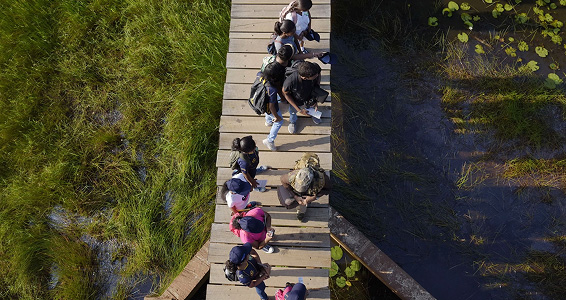
The Youth Leadership for Climate Action (YLCA) project, delivered in partnership with the British Council, stands as a significant milestone in the WNPS Youth Wing’s mission to equip young people
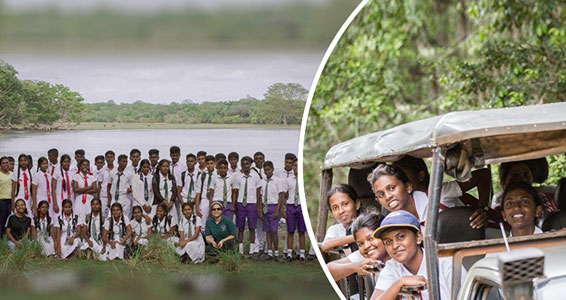
The Education for Conservation initiative, conducted under the patronage of NDB Bank, continues to serve as the flagship program of the WNPS Youth Wing