

Senior planters commit to leopard conservation
Sri Lankan Leopard Day 2024 introduced Dr. Jeannine McManus, a renowned conservation expert from the Landmark Foundation in South Africa, to the Sri Lankan community dedicated to conserving the endemic
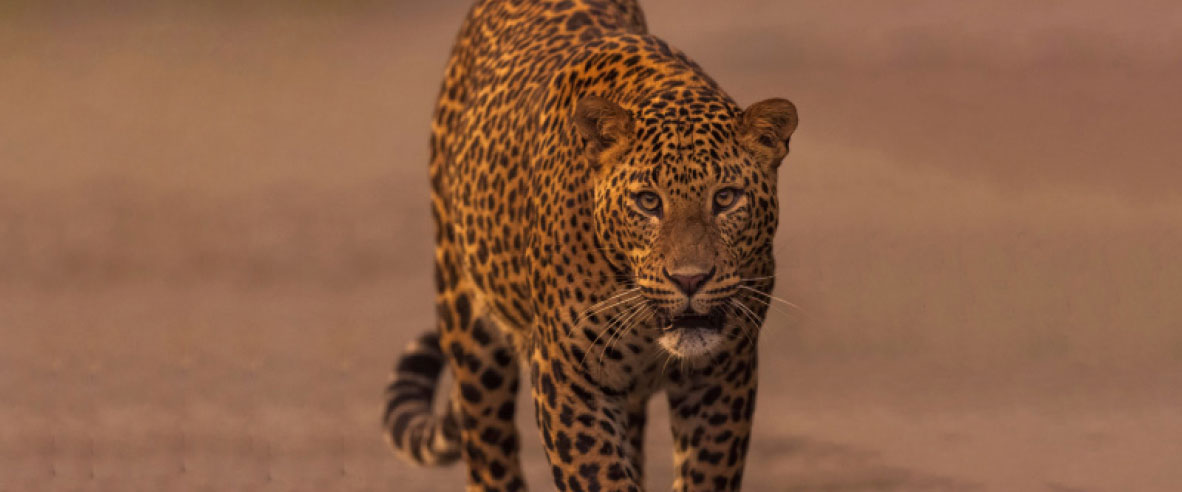
This coming week (1 August) will mark the fourth annual Sri Lanka Leopard Day.
The Sri Lankan leopard (Panthera pardus kotiya) is one of Sri Lanka’s most iconic and charismatic wildlife species. As the island’s only large predator, it plays a vital role in maintaining the ecological balance of Sri Lanka’s diverse ecosystems. The Sri Lankan leopard is a subspecies endemic to the country and is one of the largest leopard subspecies in the world.
However, this leopard is classified as ‘Endangered’ with an estimated population of less than 800 mature animals remaining in the wild. Habitat loss, human-wildlife conflict, and poaching are some of the biggest threats that the Lankan leopard faces, and in 2021, 1 August was made Sri Lanka Leopard Day following a proposal by the Wildlife and Nature Protection Society (WNPS).
As a keystone species (a species that significantly shapes its environment and influences many other species within its community), its presence is pivotal in maintaining the balance within its ecosystem.
“Leopards are apex predators that help regulate prey populations, which in turn influences the vegetation and overall health of the habitat,” explained Sabaragamuwa University of Sri Lanka Department of Natural Resources Senior Lecturer Prof. Enoka Kudavidanage.
However, the burgeoning popularity of leopard-centric tourism poses significant risks to their natural behaviours and habitats. Excessive and irresponsible tourism can lead to habitat degradation, increased stress on the animals, and disruptions in their natural activities.
“It’s crucial to remember that while we are fascinated by these animals, our presence should never interfere with their lives,” Prof. Kudavidanage said. “Especially within protected areas, the priority should always be conservation. The safety of the animals and the habitat should always come first and tourism second. The animals should be enjoyed, but without harming their existence – their daily activities and their access to water and food.”
The allure of the Lankan leopard
The fame of the Sri Lankan leopard is far-reaching. Sri Lanka’s unique allure as a wildlife destination is significantly amplified by the prospect of observing these enigmatic creatures in their natural habitat. It is one of the island’s biggest wildlife tourism draws for both local and foreign tourists.
Sri Lanka’s abundance of national parks also provides a variety of different habitats within which to spot the leopard, from dry zone parks to those like the Horton Plains National Park, which have recently seen their leopard populations garner attention for their specific adaptation to the misty mountain climate.
For a species to be endangered yet famous can be a double-edged sword. With tourism increasing as well as a growing demand for sightings and pictures of this beautiful creature, we stand to risk hurting the long-term future of the leopard in our quest to admire it and celebrate it.
This Sri Lankan Leopard Day, The Sunday Morning Brunch explored how we can celebrate the magnificent creature that is the Sri Lankan leopard without disrupting its habitat and behaviour.
“The leopard is not just a symbol of our wilderness but also a cornerstone of our ecotourism industry. One important thing to understand is we live in a wonderful, amazing country with lots of biodiversity in terms of habitats.
“Where leopards are concerned, we don’t have serious conflicts with wildlife and are able to enjoy the leopard as a country, and are also in a position where tourism can benefit from the leopard. However, in order to continue to enjoy it, we need to place value on conserving the leopard,” Kudavidanage said of our public relations with the Lankan leopard, adding that this conservation should be shaped by careful interpretations of ecology and solid research into the leopards so that we as humans could protect them better.
The role of research in conservation
Since 2022, Prof. Kudavidanage has played a key role in guiding the Multi-Regional Monitoring System for the Conservation of the Sri Lankan Leopard led by the Wildcats subcommittee of the WNPS in partnership with LOLC Holdings PLC.
Started in July 2022, the project focuses on leopard populations outside protected areas, specifically their distribution, ecology, and human-leopard interactions in human-dominated landscapes. The project has six research centres in key regions (Panama, Sigiriya, Kotagala, Belihuloya, Kilinochchi, and Kalawana), providing islandwide coverage. Activities carried out by these research centres are operated under three main pillars: research, conservation, and awareness.
Over the past two years, the project has successfully reached out to a large network of stakeholders, created a meaningful positive attitude change within many communities, and laid a successful foundation for future research. Its findings were recently presented at the 60th Annual Meeting of the Association for Tropical Biology and Conservation in Kigali, Rwanda.
“We sincerely believe that the private sector has a large role to play in matters such as protecting wildlife,” LOLC Holdings Chief Operating Officer (COO) Kithsiri Gunawardena said of how the project came to be. He noted that especially in times of economic struggle, resources were often diverted away from wildlife and environmental conservation and that, combined with the leopard’s position in our ecosystem as a keystone species, led to this investment in driving research into the leopard, which could be used to build meaningful conservation strategies for the future.
Gunawardena, who is also the author of wilpattu.com, a knowledge platform that focuses on the Wilpattu National Park, also highlighted the charisma of the leopard and its ability to better its environment, not just in the ecological sense but also in the economic and communal sense.
“The success of conservation of any national park, in my view, is the involvement of the people living in the surrounding areas,” he explained, noting that in the case of Wilpattu, which is well-known for its leopard population, the community was very involved in the activities of the park. With its youth being jeep drivers, and families owning guest houses and homestays, this fosters a strong sense of community which is centred around the benefits the wildlife of the park can provide. It also makes this community more committed to conserving it.
Balancing conservation and tourism
To ensure the sustainability of leopard tourism, it is imperative to adopt practices that minimise our impact on these majestic creatures and their environments. This involves a concerted effort from both tourists and tour operators to engage in responsible wildlife viewing and photography.
Photographer and publisher, John Keells PLC Vice President and Cinnamon Hotels Head of Eco Tourism Chitral Jayatilake shared with Brunch that one of the foremost rules in wildlife tourism was to maintain a respectful distance from the animals.
“Getting too close can be extremely stressful for leopards, leading to altered behaviours that can affect their survival,” he explained, stressing that by keeping a safe distance, we allowed leopards to move freely and exhibit natural behaviours without feeling threatened
Jayatilake also stressed that being a tourist or photographer did not lend anyone any privilege, and the same rules that would apply to any visitor to a national park would (and should) apply even to tourists and photographers.
Wildlife photography is a powerful tool for conservation, but it must be conducted ethically to avoid harming the subjects. “Photographers should prioritise the welfare of the animals over the desire for the perfect shot,” emphasised Jayatilake. This includes using appropriate equipment to capture images from a distance, avoiding the use of flash, and refraining from actions that might provoke or distress the leopards.
Conservation photographer and author Sankha Wanniatchi, who has extensively photographed the leopards of Horton Plains National Park and published the photography journal/research book ‘Ghost of the Clouded Plains’ on the Horton Plains leopards, also shared his advice on photographing wildlife, especially within a national park setting.
“My policy is to never disturb the animal and break their natural behaviour,” he shared, adding that any wildlife photographer should carefully research the animals they were hoping to photograph and gain a solid understanding of that animal’s behaviour.
Taking cues from the animals themselves is vital. “With leopards, some are habituated to humans. They won’t really care if you’re there. You can even drive fairly close to them. They will keep their distance but hang around. Others are less habituated and get scared, so approaching them needs to be done differently,” Wanniatchi said.
He further explained that his research in Horton Plains over the years allowed him to identify many of the leopards there on sight and he now had working knowledge on which leopards were habituated. However, he emphasised that this was because he had studied the behaviour of these leopards, both in a general sense and in a specific sense, which was why aspiring photographers needed to do so as well.
Gunawardena also stressed the importance of not disturbing animals, warning that animals like leopards would change their behaviour very quickly if they felt uncomfortable.
“Leopards are very smart animals. They will decide if they want to be seen or not. For example, in the buffer zones outside Wilpattu, they have altered their behaviour to the extent of becoming nocturnal because they don’t want to be seen and will only come out in the evening when the communities in those areas [chena cultivation is common in the area] are on their way home,” he said.
Gunawardena compared this behaviour to that of leopards inside the park, which were more habituated to humans (including safari jeeps), and as such, were comfortable roaming about during the day.
Jayatilake, Gunawardena, and Wanniatchi all stressed the importance of equipment for those interested in photographing leopards, even casually, highlighting that a phone camera was simply equipped to get a good picture of a leopard, given the distance that you needed to maintain from a leopard in order to not disturb it.
“I often appeal to the selfish side of humanity,” Jayatilake said of how he approaches promoting responsible wildlife tourism and photography even in pre-safari briefings. “If you don’t want to think of the animals, think of yourself. Focus on what you’re getting out of it.
“If you’re not responsible you will mess it up for yourself. If you get too close and spook the animals, they will move into the jungle. Conservationists will say you have disturbed the animal and that is a terrible thing to do. But on a selfish level, you have lost your opportunity to see that animal or take its picture. And you have also lost that opportunity for everyone around you. So think of yourself.”
Some dos and don’ts for wildlife enthusiasts
Speaking to Prof. Kudavidanage, Gunawardena, Jayatilake, and Wanniatchi, Brunch put together a list of dos and don’ts for responsible wildlife tourism. Here’s to enjoying wildlife like the glorious Lankan leopard responsibly.
Dos
Don’ts
PHOTO © SANKHA WANNIATCHI
It is important to keep in mind that leopards have occupied this island for tens of thousands of years, perhaps hundreds of thousands of years. The important thing to remember is they predate the arrival of human hunter gatherer bands in the island and have out competed and out survived the tiger and the lion. (pre historic evidence exists for the presence of both these larger cats).
Although leopards didn’t evolve here, or perhaps not even on the Asian mainland, they did arrive here a highly adapted, and resilient carnivore – the quintessential big cat. As the tiger and lion were pushed to the edge of extinction and beyond, the leopard was to emerge as the apex predator in a bio-diverse, from a leopard’s perspective, prey dense island. The leopard is distributed (from prehistoric times) throughout the length and breadth of this island, from its long coastline to its loftiest peaks and plateaus. It is a success story of an island leopard, surviving, even thriving in all habitats throughout the country, although, today their distribution is patchy rather than contiguous as in the past.
In this first quarter of the 21st century, the leopard faces a multitude of threats from humans, that number almost 22 million strong, as I write. This growing population is land ‘hungry’ and new settlements destroy leopard habitats at a rate and deplete the leopard’s prey on a daily basis, increasingly bringing wild leopards and humans into uncomfortably close proximity.
This sometimes results in tragic consequences mainly to leopards. (Human fatalities are extremely rare while each passing year racks up several leopard fatalities.) I will refrain from going into details regarding the many methods by which leopards lose their lives at the hand of their human neighbours. It is sufficient to say we humans need to take a giant step backwards from leopards, in the many protected areas in the country, as well as in unprotected wilderness and farm lands. In other words, the destruction of wild animals across the country has to reduce especially the illegal killing (poaching) of herbivores for the pot or commercial gain, as leopards depend on these prey species for their very survival.
When we deplete their prey base, they help themselves to our livestock, which is the beginning of conflict. These interactions then have predictable results, following much hysteria, fear and agitation especially in the tea growing districts of Sri Lanka. If interactions between humans and leopards can be predicted and avoided they don’t need to be escalated to a conflict situation. No casualties means no conflict is the way I see it. The unfamiliarity with large predators that have lived unseen, side by side with people for millennia only becomes a “problem” when the predator arrives at your doorstep and takes your dog or kills your cow. An efficient and skilled hunter and effective scavenger like the leopard needs only more breathing space and non interference on our part to thrive.
I am making a case for this extraordinary mammal with rare beauty and charisma, that has a value beyond what we realize today, despite an unregulated leopard tourism industry
that has mushroomed in the last 20 years. It can be a sustainable industry that is a win-win for both people and leopards, but not at the current rate of unregulated growth that exerts enormous pressures on important leopard sub populations, within some protected areas. Effective leopard conservation also requires a great deal more education and awareness about leopards and their ways, especially in tea growing areas and in the dry zone hinterland of villages in wildlife rich areas.
Coexistence; in fact mutually beneficial coexistence is possible everywhere, but each area needs area specific assessments and solutions. If problems have already arisen, they need addressing immediately(nipping in the bud) and pre-emption is necessary if they haven’t. Media education about leopards and the correct reporting of leopard related news, is vital for myth busting and minimizing the sensationalism and disinformation that results in creating unwarranted fears among the public.
WNPS has an ongoing series of workshops for journalists, to address this specific issue. It is also important that reporting on nature should be done by those who have an interest in nature, in the first place, as that is the greatest motivator to becoming knowledgeable on the subject quickly and accurately. Ideally I would say that a pre-requisite for Nature/ environmental journalism should be a childhood interest in wildlife and wilderness, not just dogs cats, pet rabbits and other cute what have you.
On a larger scale, all development activity has to factor in the areas earmarked for development being suitable. All Environmental Impact Assessments (EIAs) should be able to determine the presence or absence of leopards in a given project area (not based on anecdotes and sightings) and recommend site specific mitigatory measures. If indeed leopard habitat will inevitably be lost due to that specific project, awarding alternate lands will have to be investigated by the GOSL. Unlike with elephants, the presence or absence of leopards is not immediately obvious to a casual or untrained observer. Outside of protected areas, leopard activity tends to be entirely nocturnal and secretive hence, those skilled at picking up the ‘spoor’ of leopards should be deployed in the field by the EIA team.
On a global scale, we need to collaborate with other countries and other scientists studying leopards throughout the vast range of the species. Although our leopard (Panthera pardus kotiya) is a sub species, leopard sub species across their range have far more in common with each other than with any other cat species large or small. We need to adopt best practices in conservation, as well as be aware of how climate change is affecting wilderness and wildlife, and plan mitigatory measures and strategies. Our own continued existence on this island depends on how much strategic forest cover and related biodiversity we are able to conserve. On an island of our size (despite the subcontinental illusion) the margin for error is limited and the responsibility for conservation of this species is entirely ours.
This article first appeared in The Island on the 28th of July 2024.
Mangroves in Negombo are fast infested with invasive trees. Therefore Prof. Jayakody and the team suggests that the Forest Conservation Department could encourage people to cut down invasive trees and produce fish aggregating devices instead of mangroves.
She further said that immediately after the fallow period farmers start using weedicides to prepare for the next harvesting season. “But having seen the amazing number of birds we wonder whether we could discuss with farmers in producing a bird friendly rice variety which could be sold at a premium price. This way they will be mindful about controlling their use of weedicides and it will be a win-win situation for both farmers and birds. It could be marketed as a bird friendly rice from the RAMSAR site,” she added.
The ANRM project is owned by the DWC while the WNPS is the principle science partner to the DWC. State institutions involved in the project include Ministry of Environment in addition to the Department of Forests and Wayamba University. Several partners that have collaborated with WNPS in this endeavor include Hemas Consumer Brands, Lanka Environment Fund, Hayley’s Advantis, CMA CGM, Star Garments, Hirdramani Apparel and Biodiversity Sri Lanka. The international partners of WNPS include US Forest Service, CEFAS-UK and CSIRO Australia.
This article first appeared in the Daily Mirror on the 17th of December 2024.
A predator’s survival depends heavily on the availability of natural prey. Although wild prey- deer, primates, wildboar – are still present, reducing wild habitat, particularly due to deforestation, further reduces the vegetation and cover needed to support healthy prey populations.
Many forested areas are used for free-range cattle grazing, leading to increased competition for food and space, which puts further pressure on wild herbivores. If prey becomes scarce, leopards are forced to seek alternatives, such as domestic livestock, bringing them into conflict with humans, and increasing the risk to them from retaliatory killings and disease.
The threats faced by leopards in Sri Lanka are not isolated; they are interconnected and compounding. Habitat loss leads to fragmentation, which in turn isolates populations, increases conflict, and heightens vulnerability to snares and poaching. The decline of prey and the rise of human settlements only tighten the noose.
But Sri Lanka finds itself in a better position than many other nations with substantial extant biodiversity, including wild prey for leopards, as well as reasonable forest cover and a climate that allows for effective reforestation and natural regeneration of degraded areas. A well-entrenched conservation ethic which sees sharing space with wildlife as normal creates additional momentum for long-term conservation.
Conservation solutions must be multi-faceted: protecting existing habitats, reconnecting fragmented landscapes through identified ecological corridors, and strengthening law enforcement. Community engagement and snare removal campaigns are also crucial in areas where these are now very real threats.
Wildlife needs stepping stones of connected forests within the fabric of a human dominated landscape. We must move beyond thinking of Protected Areas as islands. Instead, they should be viewed as nodes in a larger ecological network — one that requires political will, scientific insight, and public support to thrive. The leopard is an ideal proxy for wider conservation on this island. It’s unique ‘Umbrella species’ status – the influence it exerts on larger landscapes and biodiversity – means that ensuring this island leopards future, could ensure our functioning ecosystems.
We must act now, so that the Sri Lankan leopard does not become a shadow in the future— a symbol of a wilderness we failed to preserve. It bodes well that we still have leopards, let us not take that for granted.
This article first appeared in the Sunday Observer on the 3rd of August 2025.
Sri Lankan Leopard Day 2024 introduced Dr. Jeannine McManus, a renowned conservation expert from the Landmark Foundation in South Africa, to the Sri Lankan community dedicated to conserving the endemic

Join internationally acclaimed wildlife photographer and Sony International Brand Ambassador Lakshitha Karunarathna for an inspiring lecture that weaves together art, innovation, and conservation.

The Youth Wing of the Wildlife and Nature Protection Society of Sri Lanka (WNPS), in association with
USAID, opened the “Tales of Conservation” exhibit that uses art to inspire